Saturday, 28 May 2022

Parched Lake Mead Yields Bodies and Ghosts of Old Las Vegas by Simon Romero

 As Climate Change Produces Grim Discoveries,

Theories Abound on Remains Found in a Barrel

From

The New York Times, Sunday, May 22, 2022

Okay, the title and subtitle give the article away. But how fascinating is that story?

Lake Mead, the reservoir of of the Hoover Dam, is now just 30 percent full, and is revealing its secrets. 

Given the long history of Las Vegas and the Mafia’s involvement, is it any surprise that old cold cases are being solved?

One of the unexpected consequences of climate change I suppose

Friday, 27 May 2022

Doc Savage: Fortress of Solitude by Lester Dent writing as Kenneth Robeson - Book Review #324

Back in 2006, a publisher called Nostalgia Ventures, Inc., created beautiful reproductions of the old pulp era adventures of Doc Savage.

Doc was the original template of our "modern" heroes Batman and Superman.  Indiana Jones is very much in keeping with Doc Savage.

I purchased lots of the magazines for a few years then drifted off.  I blew the dust off the books recently and picked up issue #1 which contains two "complete book-length novels," Fortress of Solitude and The Devil Genghis.

It was an interesting place to start a new publication of reprints.  I would have expected Will Murray, the consulting editor of the series, to start at the beginning.  Instead he chose these two stories, #68 and #70, when the series was well established.

John Sunlight, the antagonist of the books, marked a departure in the series.  It was the first time Doc suffered the bad guy to get away.

In Fortress of Solitude, John Sunlight stumbles upon Doc's secret hideaway.  Once he makes his way inside, he takes advantage of all the technology within for his own purposes. 

Up to this point the Fortress has not been revealed to the readers, only that Doc occasionally went there to think, learn, and train. 

The beauty of the Doc Savage books is that you need not read them in order.  Each story is self contained and the Doc Savage universe is explained in each installment with the first time reader in mind. 

That is, except for these two.

Wednesday, 25 May 2022

To Leave It on the Mountain by Maaza Mengiste - The New York Times Style Magazine, May 15, 2022

This issue of the magazine focuses on travel, particularly on places returned to after a long absence. 

This recollection centers on a childhood illness while traveling with the author's mother to Mount Pilatus, Switzerland.

What happens when a place is associated with a bad memory?  Many may not return.  Sometimes going back can be a tonic that can only be appreciated once the old memories are examined and compared to the new experience. 

It's not unusual to avoid a place where an unhappy event happened.  But is it the fault of the place?  No, it's just what the place itself represents.  Giving the place a second chance may be an opportunity to give the memory some perspective. 

There was a warmth to the story that I took to immediately.

Monday, 23 May 2022

Gods of Risk by James S. A. Corey

This is my kind of Science Fiction.  Humans live and work in space, on Mars, in the asteroid belt.  No big deal.  We figured out how to do that.

However, people are people and they have the same troubles and desires we do today.  And that's what makes the whole Expanse series so compelling for me.  Sure, there is an alien baddie.  But humans used it, without understanding what it was, for their own desires; money & power.  The classic corrupters.

David Draper is a young student trying to get through a tough patch in school to get a good placement in university.  His aunt is ex-marine Bobby Draper, an important character in the previous novel, Caliban's War.

Somehow, he got tied up with a dangerous drug dealer by cooking the drugs he sells.  David falls for the drug dealer's girl, Leelee.   She gets in trouble and David tries to help.

This book is much like a tie-in novel or fan fic, but provided by the authors themselves.  It expands The Expanse, if you will.   It is an excellent story and fills in the gaps between Book 3 and Book 4.

I would love to see the spread sheet the authors must have had to create before writing a word.

Well worth the effort to read this story.

Sunday, 22 May 2022

From Canadian Geographic Magazine - May/June 2022

Come Full Circle by Darcy Rhyno - The account of the author sampling two trails form the The Island Walk, a 700-kilometre hiking trail that circumnavigates Prince Edward Island. 

I enjoyed this article, it reminded me of Bill Bryson's A Walk in the Woods and his quiet, casual way of looking at the world.  Rhyno has that same, self-deprecating style, unafraid to reveal that he started his journey going in the wrong direction.

Knowing this trail exists, made me think of the many trails available to me by walking out my front door and heading to Edmonton's river valley.  There are many trails I have yet to travel all within easy reach.


A Sailing Trip Down the St. Lawrence - and Down Memory Lane by Abi Hayward.  Another gentle narrative of a sailing trip that brought up memories of family and how sailing is part of the author's history.  

There is some discovery too, in the Sailors Church, Notre-Dame-de-Bon-Secours in old Montreal and the votive ships that hang from the ceiling.

A good travel story does not necessarily have to include a daring escape from a life-threatening situation.  Sometimes, when things go well, and as expected, there is still a reward for the effort.

Life & Death on the Bugaboo Spire - BC Magazine

I subscribe to British Columbia Magazine.  I live in Alberta.  I wish we had a magazine like this.

I also subscribe to their newsletter where they link to previous stories in the magazine.  That's how I came across this one.

I do enjoy a good adventure.  When it's real, I wonder why people do the things they do?  Take the risks they take?  This is why I am well and truly an armchair traveler. 

This true account of being trapped on a BC mountain peak during a storm sent chills down my back.

Excellent writing.

Better yet, if you enjoyed this piece, it's part of a larger collection, Tales of B.C. by Daniel Wood


Saturday, 21 May 2022

Micro Stories


I bought a couple cups of coffee from Coffee Bureau in downtown Edmonton.  The sleeves had something rather special - short stories.

The Writers Gild of Alberta created a clever way to get stories out into the world.  Better yet, my wife got a different story than me and we got to trade them with each other.

Tuesday Night Auction Club by Ali Bryan - A beautiful and heartbreaking memory of a perfect moment.

Lucky Birds by Jacqueline Kwan - Exploitation and decisions. 


Friday, 20 May 2022

The Apollo Murders by Chris Hadfield - Book Review #323

I am a space buff.  I was a kid during the Apollo missions.  I grew up with the promise of space travel and exploration.

Chris Hadfield is a Canadian hero and astronaut.

I enjoyed taking a ride on the fictional Apollo 18 mission.

But...

It missed the mark for me.  Not because it was a bad story.  For me, it was because it was historical fiction.  When a twist in the mission occurs, the decisions made struck me as being implausible.

I kept thinking to myself, "There is no way NASA and Mission Control would allow this to continue."

Had this story been inside a world of the author's creation it would have been terrific.  Inserting it into a known history is so much more difficult to pull off.

I very much look forward to his next novel.  I could see a series, where the settings change throughout the history of NASA.  The Shuttle era.  The ISS.  The new Artemis program.  SpaceX.  Missions to Mars.

Hadfield has the inside knowledge which makes his writing so very compelling. 

Thursday, 19 May 2022

A Sci-Fi Writer Returns to Earth: ‘The Real Story Is the One Facing Us’ - From the New York Times

Kim Stanley Robinson is trying to help change the world.

I had a difficult time with his Mars trilogy.  The depth of research made me feel he could have use an editor.  But after I completed the series, his work percolated in my mind.  I began to appreciate the depth and the detail.  This kind of attention is exactly what takes place in science.

Fiction has often informed our world.  The flip phone came from Star Trek.  The iPad from The Next Generation.

In this article,  Alexandra Alter writes how KSR is focusing his fiction to solving the world's problems.

I am now very intrigued to read more from him. The Three Californias trilogy, the Science in the Capital trilogy, New York 2140 (Excellent by the way), and The Ministry for the Future.

Yes, he will digress into long expositions, but that is actually the point.

As a reader, I will be looking for his research, his lists of facts, his history lessons. I will be reading KSR as a jumping off point for further reading.  

Climate change, geopolitics, and economic change, these things are important.  I may not be able to do much to help create a better world, but I own the world my time to understand the problems.

Kim Stanley Robinson is an intelligent, thoughtful author whom I trust.  I can't think of a better writer to guide the discussion.

Tuesday, 17 May 2022

The Undiscovered Country by Katie Kovacs

I do love a collection.  Be it essays, short stories, whatever.  I can dip into the book whenever I please. Put it down again and it will be waiting for me to return.

Midlife is a terrific collection of essays from alumni of the University of Alberta's Gateway newspaper about reaching middle age in 2021.

Katie Kovacs's account of her divorce and return from France to Edmonton is moving and raw.

Life is not easy.  Divorce makes it ugly.  Add a pandemic.

An excellent entry to an already excellent collection.


Taking the Time to Read Slowly and On Purpose


Just say no (to content): Nietzsche’s surprising “information diet”

I was happy to stumble upon this book excerpt on the Ars Technica website.

Slow reading.  Thoughtful reading.  It's an article for out times.

It is said that people read more now then ever.  But texts and doom scrolling takes its toll on thoughtful reading.  Distractions abound.

Click HERE to be taken to the article.

It's worth the read because it's worth thinking about. 


Monday, 14 June 2021

Insane Mode by Hamish Mckenzie - Book Review #322


How Elon Musk's Tesla Sparked an Electric Revolution to End the Age of Oil


In the fast-paced world of technology, a book like this one can age quickly in so much as knowing that more has progressed since the publication date.  This could easily be updated every couple of years.

Still, it was a terrific read and made me appreciate just how complicated the industry is.

Getting into the automobile industry is hard enough (understatement, it's next to impossible) but to try and change the foundation of that industry is madness. 

Steve Jobs may have wanted to "dent the universe," Elon Musk is taking a crowbar to it.  With his passion and determination, he has managed to create a paradigm shift not only in the automobile industry, but to change how the entire human race operates, which will in turn save us from global climate change.

He is the catalyst to help us enter the electric age.  What?  There is electricity everywhere!  Sure, but it is nearly all powered by the burning of fossil fuels.  We are still very much in the combustion age. 

Honestly, I felt reassured that the electrification of transportation, and how society operates, is now unstoppable.  We will have economic, technical, and social advancements in the next couple of decades much like the post World War Two years.

Reading this book won't bring you up to the current state of the industry, it cannot do that, but it gave me an appreciation of the complexity and the activity that is underway, out of public view and in countries that are not in Europe or North America.

Highly recommended. 

Monday, 7 June 2021

The Automatic Detective by A. Lee Martinez - Book review #321


Mac Megaton is a robot taxi driver just trying to earn his citizenship.  

One day his neighbours are abducted, the circumstances are suspect, but the police are not motivated, so Mac decides to do something about it.

This book is a wonderful mashup of detective fiction, a Jetson's vision of the future, all set in a city filled with talking gorillas and mutants.  

Narrated by our protagonist robot, I was reminded of Robert B Parker's Spenser series.  Empire City is a strange place populated by even stranger citizens which brought to my mind George R R Martin's Wild Cards books.  

The story itself moved along quickly and was peppered with terrific side characters.

If you're looking for some light-hearted, escapist fun, in this crazy pandemic world, this book will fit the bill.  It will help you to forget our reality for a while.

I am glad I read it.

Recommended. 

Monday, 31 May 2021

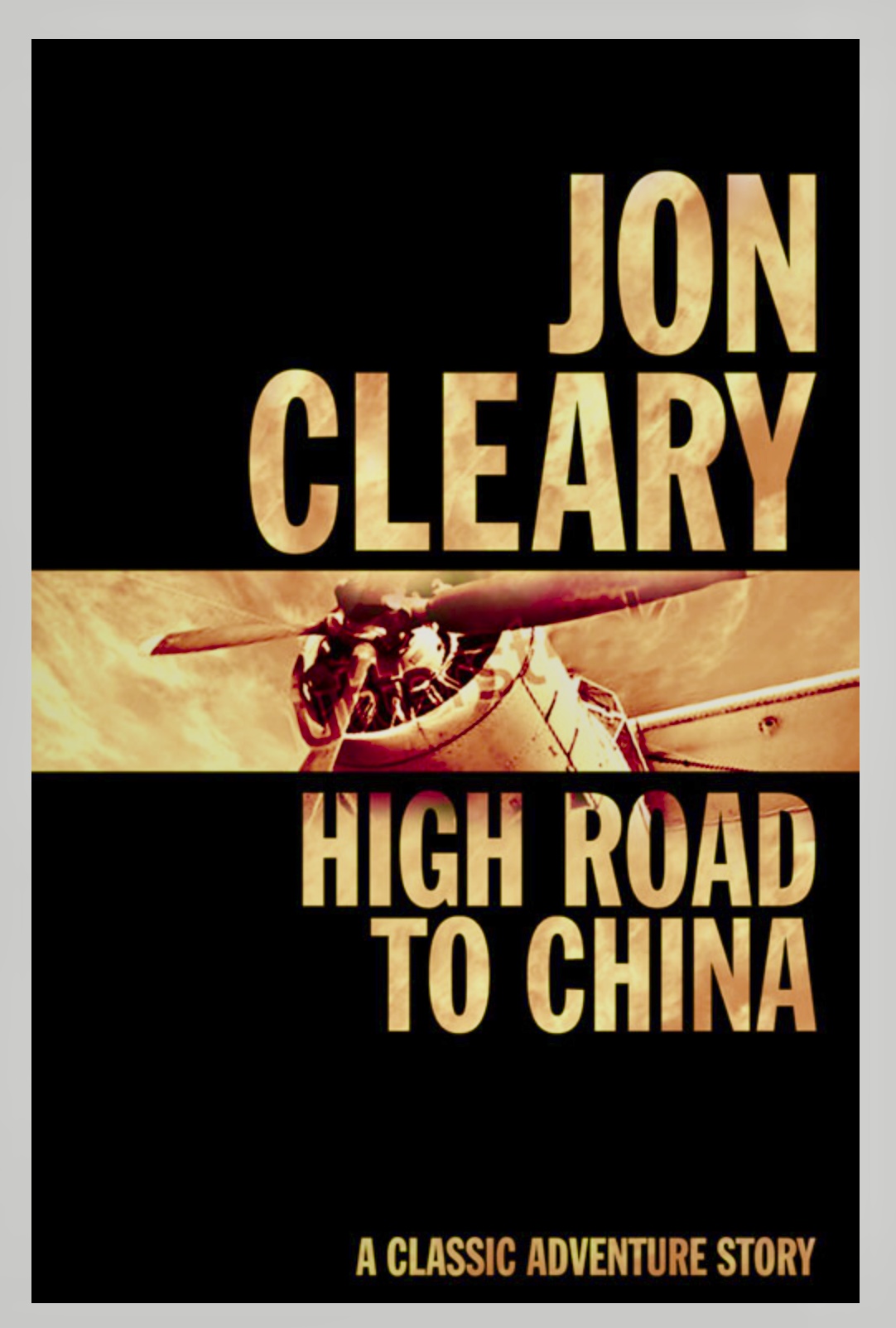
High Road to China by Jon Cleary - Book Review #320


One of my guilty pleasures is the movie of High Road to China staring Bess Armstrong and Tom Selleck.

After reading North to the Orient I was wanting more adventures from the 1920's.  That book reminded of the movie.  Somehow I discovered it was based on a 1977 novel.   

As the saying goes, "The book was better."  In this case the book was very different.  The basic plot was the same; daughter must rescue father and needs the help of a pilot.  Tom Selleck's version of O'Malley was certainly funny but noting like the source material.

The book had a terrific love of travel and adventure.  Every time they had to put down for fuel, they would be entangled in the circumstances they literally landed in. 

Cleary's writing was crisp and I enjoyed how he changed the points of view and narrators in a consistent way.  Each chapter was broken into sub-chapters from these differing angles.

In my view, movies do not have to follow the books as scripts.  A different take on a story can be just as entertaining and there is something to be enjoyed by each version.

Like I said, I have a soft spot for the movie of this book.  Now that I've read the novel I can appreciate what the film lifted and made a new story from it.

Great summer read.

Because it is a period piece the book stands the test of time. 

I usually want a paper edition of my books but I really did not want to wait for a copy to arrive in my mailbox.  I download the eBook version from Kobo partly because I really liked the cover art.

Through this I've now discovered a new author to explore.  Sadly Jon Cleary is no longer with us but he left many books behind.  I am glad he did.


Monday, 24 May 2021

Travel Writing by Peter Ferry - Book Review #319


This was the strangest most satisfying book I've ever had the pleasure to experience.

It was narrated so very well by Anthony Heald.  His voice kept me coming back to the story especially when I was on the verge of giving up on it after I had put it down for a number of days. 

It was a complicated novel.  The very first lines established that our narrator (the actual author in this case) admits that he's making all this up, except for the parts that are true.  It's not often I've experienced the breaking of the fourth wall in a novel.  I certainly enjoyed it here.

The point of view changes from Ferry teaching a class, to the story of a car crash and how he becomes involved in it and then obsessed by it.  The genres also evolve from a literary fiction of his obsession and the effect is has on his relationships and professional life, to an investigative crime fiction. 


Through it all there are interludes of actual travel writing, which I enjoyed very much for it's observations of people.

Flipping through all of these "realities" sometimes left me confused, but I just allowed the narration to continue and let it wash over me.  I had faith that I would be able to pick up the threads later on.

Peter Ferry is an accomplished and very skilled writer.  To learn this was his debut novel astounded me.  I was left in awe of his skill to pull off such a complex story structure.

A surprise of a book.

Recommended for sure. 

Might I suggest a much more thoughtful review of the book?  If you find yourself unconvinced by me to pick up Travel Writing try, reading this review from the good folks at Bloom.


Monday, 17 May 2021

Ten Arguments for Deleting Your Social Media Accounts Right Now by Jaron Lanier - Book Report #318


 I've been reading the book Ten Arguments for Deleting Your Social Media Accounts Right Now by Jaron Lanier.  In it he made a chilling observation; how the consumption of news is no longer a shared experience.  In the pre-social media times folks would get their news from television, radio or newspapers.  Everybody got the same message.

Picture this, we are in a large room with dozens of people, or a football game, it doesn't matter, if everybody was looking at their phones at the same time, all looking at the news feed on Facebook, not one feed would be the same!  The algorithms choose what is presented to each individual, tailored to their browning history.

You can see how this could cause confusion among folks, because nobody is getting the same story.  Social media, being what it is, is not not held to the same standards as traditional journalism and therefore has the ability to muddy the waters of trust.

The trouble with algorithms is that they are not working for US, they are working for the social media companies.  They are designed to keep us "engaged" and to stay on their platforms for as long as possible.  These algorithms don't care HOW they keep us scrolling and they all eventually learn that negative stories are more powerful "engagement" tools than positive ones.

By law, traditional broadcast media must present fact-checked and balanced stories.  Do they sometimes get it wrong?  Absolutely!  They are run by humans after all.  But humans are guided by a moral imperative (some more than others to be sure) and we have structures of checks and balances to keep people who are reporting and broadcasting the news accountable.   The black boxes that feed us the news on social media platforms have no such morals and have a different goal than the reporting of the best version of the truth available at the time.

Lanier is a compelling writer and has a sense of humor about the predicament we find ourselves in today.  

Recommended.  It'll make you think about what you're doing with your phone. 

Monday, 3 May 2021

The Diray of a Bookseller by Shaun Bythell - Book Review #317


I purchased this book from a lovely new book store, Daisy Chain Book Co. in The High Street on 102 Ave and 125 Street, here in Edmonton.

It was rather fun to buy a book about running a used bookstore from a used bookstore.

Shaun Bythell is a bookseller in Wigtown, Scotland  who took pen to paper and began writing a diary about his life in the shop.  It is filled with quirky characters; the employed, residents of the town, other shopkeepers, postal employees and customers.  All ring the bell over the door and enter his observations.

Bythell has a warm and yet weary take on humanity.  I can certainly relate to often wishing I could function without the encumbrance of other people.  And yet, there is love in his words.  He is a part of the community and he is just as exasperating as everybody else around him.  There is a self-deprecating undercurrent to his observations.

It's an easy book to dip into as each entry is about a page long.  People come and go from the narrative and it's nice when some pop up again.  I found his book buying trips to be very interesting.

The epilogue was heartbreakingly beautiful.  It is life.

Highly, highly recommended.


Monday, 26 April 2021

North to the Orient by Anne Morrow Lindbergh - Book Report #316

How refreshing this book was from the previous book review!

It was beautifully written, honest and romantic.  In the 1930's flight was still very much in its infancy, the realm of adventurers.

I loved the gentleness of her writing and how she and her famous husband, Charles, were surveying routes to China for the planned commercial aviation business.

The flight went from the east coast of the USA, up to Churchill on the Hudson's Bay, across the high north of Canada and Alaska to the Kamchatka peninsula, Japan and finally China.  All of this in a two-person float plane with barley any infrastructure or radio communication.  Amazing.

For an 86 year-old book it read very well.

I was especially taken by how Ms. Lindbergh rankled at the expectations of the media.  Being a woman they were only concerned about what she was wearing and what she packed for lunch.  It's nice to see how her pioneering worked to promote and push forward social equality.

I highly recommend this book.  I restored my faith in humanity and in story telling.


Monday, 19 April 2021

The Executioner #24: Canadian Crisis - Book Report #315

 Canadian Crisis (The Executioner, #24) by Don Pendleton

About a dozen years ago I went on a buying spree for old Men's Adventure paperbacks.  For the most part I bought them for their covers and their very straight-forward stories.

Through some exploring on the internet I've learned that Don Pendleton is pretty much the creator of today's modern Action/Adventure genre.

Mack Bolan is a lone-wolf executioner of "justice" on a one-man mission to rid the world of the mafia.  This being written in the '70's the mafia was top-of mind.

If you're a comics reader then The Punisher will come to mind as it is a complete lift from The Executioner series.

Let me just say, right now, I did not like this book.  I hated it. 

Through my 55-year-old eyes, I saw nothing original here (although, as I said, this was original at the time) and was nothing more than gun porn.

The series itself took from the old pulp novels of the 1930's.  Bolan himself leaves a sharp shooter medal at the scene of every massacre. 

This being book 24 there are lots of references and characters from previous books, so there is a bit of reward for the dedicated reader. 

Two thirds of the way in and I was hating myself for wasting my time with this crap.  The body count was incredible with nearly all of them suffering a gurgling death or a splatter on the wall and a wipe with the body as it smears the gore on the way to the floor.

I am so sick of gun justice - I know there is fiction out there that does not rely on so much flying lead but it's difficult to find

Monday, 15 March 2021

A History of Canada in Ten Maps by Adam Shoalts - Book Report #314

 Epic Stories of Charting a Mysterious Land


Canadians like to think our history is boring and generally peaceful.  But the truth is much more insidious than that and our long history of violence, oppression and disregard for the Indigenous people of this land was hard to learn. 

Adam Shoalts is an Explorer in Residence at the Royal Canadian Geographical Society his previous books blend Canadian history with his own adventures into the blank parts of our map.  This was a bit of a departure for him in that the maps were not his own but those of our history.

From the very earliest maps to the more modern and complete ones he told the story of how Canada became a country.  The importance of our rivers, but more importantly that of the Indigenous nations that helped the Europeans along, was alway central to the pursuit of trying to find the edges of this unknown continent. 

I was disheartened by the violence throughout the entire book.  The conflicts between whites and Indigenous came as no surprise however there was distrust and violence between the Nations themselves.  None was more disturbing to me than the fight between the Dene and the Inuit described by Samuel Hearn in his expedition of the Coppermine River. 

Throughout the book I kept thinking at how deeply flawed humans are.  Our willingness to hurt each other and to distrust those who are not like us is so deeply baked into our DNA that I wonder if we can ever overcome it. 

I am very glad to have read the book.  I learned so much about Canadian exploration history.  Even though it was a gut punch at times it is an important book to help us understand who we are and what kind of country we want to become.  This will not be easy. 

Monday, 8 March 2021

Wild Cards I - Voume One edited by George R R Martin - Book Report #313


Apologies for the lack of posts.  There has been a pandemic going on and I've been busy building my own personal blog at eric-hebert.ca

It was the cover that drew me in.  It looked steampunk to me but I've heard the series described as dieselpunk  which is similar in that it's "retro futuristic" but instead of being informed by the Victorian era it takes its technology cues and attitudes from the 1930's to 1950's.  

I've always been drawn to the aesthetics and technology of the WWII era and the rest of the 1940's.  So this looked like fun.

The series has been around since the 1980's and continues on today.  This particular book was in a mini hardcover format that I also found interesting and prompted me to buy it.  I only wish the other two books in the first cycle were available in the same format, they would look very nice on my bookshelf.

The stories are all loosely connected around a singular event, that of an alien virus spreading throughout the world killing many and giving others "powers" that could be described as super or meh.  Some survivors were made heroic, others villains and still others merely shlubs. 

Think of the X-Men to get a feel of the super-powers folks develop.

Each story was a delight to read and did not just tell the story of some conflict but also delved into the consequences of being changed by the Wildcard Virus.  There is a humanity, humour and pulpy fun to the stories.

I found this book a delight to read as it offered a timely subject (the virus) but also charged the stories with fun.  I felt that we can get through this fight with COVID-19 in much the same way as the characters deal with their virus, by coping and adjusting to it.

Recommended for a bit of escapism in a comic book way that does not take itself too seriously. 

Monday, 12 October 2020

Iceberg by Clive Cussler - Book Report #312


I grew up reading the Dirk Pitt adventures.  At the time, they were a great romp and I loved them.  As I kept reading these summer books, I got a bit tired of how Cussler would wrap Dirk Pitt in the American flag and just how invincible he was.

But I had missed the point; the author was writing camp, fun, over-the-top adventures in the style of the pulps.  I didn't find them believable.  

I wasn't supposed to.

Now I'm in my mid-50's and trying to read them again.  Perspective helps and I can certainly turn the pages for the sheer fun of a story well told.

Iceberg was first published in 1975 and it certainly feels a bit dated, but not by much.  There is some light misogyny and heavy smoking which was typical of the time.

I remember how I always liked the first two thirds of his books.  Iceberg was before his formula was set (much like a James Bond movie) so it lacked the historical reference and his good old buddy,  Al Giordino.  Which I missed.  Yes, the last third was over-the-top to the point of eye-rolling.

It was a fun read - but it was fluff.  It may be awhile before I read Raise the Titanic!

Still, if you're missing James Bond, you might enjoy one of these classics.

Recommended, but don't expect much.

Below is the cover of the novel as I read it in the late 70's.


Monday, 24 August 2020

The Adventurer’s Handbook by Mick Conefrey - Book Report #311

 From Surviving an Anaconda Attack

to Finding Your Way Out of the Desert


I loved this book.  The illustrations, the tips & tricks and the history of explorations were all neatly packaged in this small hardcover book.  It was a joy to read.

It is also a terrific guide into the subject of adventure, travel, discovery, endurance, glory and tragedy.  If you are curious about the past and how the world was discovered, mapped and understood, this is the book to reach for.

It is chock-full of brief descriptions of countless expeditions.  You will easily find subjects you are interested in and it will point you in the direction to discover more.  From mountain climbing, desert explorations, ocean sailings of discovery it's all there.  Names, dates, expedition titles all are jumping off points to discover more books or websites that will expand on what is presented by Conefrey.

While reading this book, I often put it down and went outside for some fresh air.


Highly recommended.

Mick Conefrey's website - https://www.mickconefrey.co.uk/

Mick Conefrey


Monday, 17 August 2020

Himalya by Michael Palin - Book Report #310

Once again, with charm, respect and genuine curiosity Palin travels into lands filled with mystery and legend, at least to this Canadian reader.
  
I personally did not engage with this adventure as I had his other travels.  There was a more religion, spirituality and superstition in the groups of people he met than I had interest in.  That says more about me than it does about the people or the narrative.  Spiritualism is just not for me.

That said, there was plenty to be learned at the border crossings and the history of previous occupations, wars and political influence.

My favourite passage of the book summed up the entire experience and perhaps all of his explorations.
 
"The enjoyment of the world is immeasurably enhanced not just by meeting people who think, look, talk and dress differently from yourself, but by having to depend on them. The trio of Bangladeshi fishermen who learnt the arcane art of television filming in a little less than half an hour are only the last of a long list of those who had every reason to think that we were completely mad, but who decided, against all the odds, to be our friends instead."

Michael Palin's website - https://www.themichaelpalin.com/

Michael Palin's travel website - https://www.palinstravels.co.uk/


Michael Palin

Monday, 10 August 2020

A Heartbreaking Work of Staggering Genius by Dave Eggers - Book Report #310

AHWOSG has been on my TBR for as long as I can remember.

It was a wild ride through the mind of a young man going through a wild time in his life.

Heartbreaking to be sure.  The opening sequences of Dave coping with the illnesses of his parents was difficult to take.

Eggers captured perfectly the voice of the North American human male in his early 20's.  The scattered thoughts, the manic flood of conscious thinking, the wild, world-changing ideas of youth and the resilience of human spirit are all here.

It took me some time adapt and accept the flow of the book.  It is not a linear thing.  Is it memoir?  Sure, kind of.  Is it fiction?  It often felt that way.  Is it true to life?  Absolutely.

True to American life, which is not universal.  And manic in its own way.

Many times, the narrative made me feel embarrassed to be male, white, and lucky to live in a country like Canada.  But it is nonetheless a valid experience.

Eggers has an inspiring grasp on honesty.  He, as the character in the book, is not easy to like, but I came to understand him.

The book is a roller coaster ride in the dark.  I could not predict where even one sentence was going to go, never mind a chapter.

But it was worth the ride.

Recommended. 

Dave Eggers' website - https://daveeggers.net/

Dave Eggers

Monday, 3 August 2020

The Sixth Extinction by Elizabeth Kolbert - Book Report #309

An Unnatural History

Hold on to your optimism because this book will damage much of the hope for the future you may have.

What I enjoyed most was learning of the history of the sciences we take for granted today.  The very concept of extinction got supporters of the idea laughed out of the room.  To many scientists in the 17th century, every known creature was thought to have always been there.

When a mastodon's skeleton was discovered in the United States, it just proved that a living herd had not yet been found in the wild.  Not that it was evidence of a long-lost species.

Peter Diamandis once said, "The day before something is a breakthrough, it's a crazy idea."

The book is a long list of crazy ideas that have become accepted fact.

By page 19 it is no surprise to learn that the rapid extinction event amphibians are being accelerated by our own human activity and systems.

My constant complaint in these kinds of books is that they are full of destruction & doom and short of constructive hope & solutions.

That said, it's a terrific read.  The history of scientific discovery is especially telling.  Just think about how the very notion of climate change was universally laughed at only 20 years ago.  Not as much now.

The book does not touch on this but, I feel this is the biggest scientific, economic and social opportunity humanity has ever had.  We have the chance to reinvent everything!  

So far, our world has stumbled into the future, today we can plan it.  Reimagine it.  Improve it.  Best of all, the world is full of those crazy ideas that just might work.  Oh, my!  We could be at the inflection point where humanity realizes it's true potential.

Elizabeth Kolbert's website - http://elizabethkolbert.com/


Elizabeth Kolbert


Monday, 1 June 2020

Dragon Teeth by Michael Crichton - Book Report #308

Oh my goodness.  What fun!

This book was given to me by a friend at a time when I needed an easy distraction.

The story, set in the American west of 1876, felt cinematic.  I could envision in my mind all the standard western movie scenes, from the train ride, to the saloons and the frontier towns.

There were wonderful characters, leading separate expeditions to the badlands of the Montana Territory, searching for dinosaur bones.  

I found it interesting how the science of the day was so controversial in the context of Charles Darwin's revelations from his book On the Origins of the Species 

Paleontology was a very new branch of science and the search for discovery was a "wild west" of it's own.

The book as an easy read, felt fresh and was well worth reading.

Michael Crichton's website - http://www.michaelcrichton.com/

Michael Crichton

Monday, 25 May 2020

Thrive by Dan Buettner - Book Report #307

Finding Happiness the Blue Zones Way


Dan Buettner originally set out on a National Geographic research project to discover the commonalities of pockets of human population that has historically lived longer than the average.

He discovered many things; people generally are physically active, they eat primarily veggies & fruit, they have close personal connections with family and friends.

One of the byproducts of his investigations was general happiness.

It makes sense that if you are healthy, active and are surrounded by people you like, you'd feel pretty happy.

That is what this book explores.

I like the premise.  Sure, we are all looking for a diet to improve our health and to lose weight.  Wouldn't it also be terrific if you would somehow become happier too?

I'd buy that book.

Check out Dan Buettner's TED talk, if you find it interesting you will find all of his book are too. - https://www.ted.com/speakers/dan_buettner

Dan Buettner's Blue Zones website - https://www.bluezones.com/


Monday, 18 May 2020

The Year of Less by Cait Flanders - Book Report #306

How I stopped shopping, gave away
 my belongings, and discovered life is worth more
 than anything you can buy in a store.

It's a common problem in our cozy First World:  we have too much.

Too much stuff, too much clutter, too many calories and, too many demands on our time.

There are loads of self-help books out there help us to simplify our lives.

This one was a little different.  I was expecting the nuts and bolts of simplifying, hoping to find a few tips and inspiration.  What I got was the struggle the author went through to achieve her goals, not how she did them.  It showed the strategies she employed to keep herself on track and it explored how she motivated herself to continue even when events in her personal life could easily have derailed her.

This was very helpful.  To be shown how the conversations you have with others, how challenges in life, be it professional or personal, have the ability to make your well laid out plans more difficult, was refreshing and familiar.  I did like how she tracked her progress on a calendar, it's something I use everyday; seeing the successful days pile up as I cross them off in bold, black Sharpie is satisfying.

I like to think of the book as a personal growth memoir rather than a self-help book.  Cait Flanders offered plenty of inspiration but she also gave lots of room to make her experience something I could modify and make my own.

It was a warm and charming book.  I was rooting for her the whole time.

Cait Flanders' Website - https://caitflanders.com/

Cait Flanders


Monday, 11 May 2020

Peak Everything by Richard Heinberg - Book Review #305


Narrated by Edward Dalmas

To be honest I felt like there was no hope for humanity after hearing this book.

The world is a big giant mess, I already knew this.  It's why I picked it up.

I've said it before, with a lot of these books they are heavy on problems and light on solutions.  Heinberg simply made me feel like everything was hopeless and I just wanted to give up.

But as the eternal optimist, Peter Diamandis, often says - "The world's biggest problems are the world's biggest market opportunities."  Keep that in mind.

A book like Peak Everything will shine the light on the problems.  It will be up to you to decide which ones you'd like to tackle and to go out to find the solutions yourself.

To be fair, Heinberg does have some solutions, but they mostly revolve about returning to an agrarian life.  Who knows, maybe he's right.

Do I recommend it?  Sure.  Why not?  Just be warned that it's a very one-sided read.

Richard Heinberg's website - https://richardheinberg.com/

Richard Heinberg

Monday, 20 April 2020

Sea Sick by Alanna Mitchell - Book Review #304

I found this book most illuminating and upsetting.

Being landlocked in Alberta I seldom think about the oceans.  I had never considered how our local agriculture can damage the oceans.  But fertilizer, pesticide, and herbicide runoff make it from the rivers to the oceans creating lasting damage to the ocean environment.  Just Google Gulf of Mexico dead zone to get an understanding of how everybody touches the oceans.

Overfishing is nothing new, we've heard about it for decades.  Just think of the shutting of the Atlantic cod fishery in eastern Canada.

The die-off of coral is much more serious than I knew about.

Most alarming is learning how the oceans play their part in the problem of CO2 rise.  I had no idea that the waters of the world absorb the gas, which sounds like a good thing, right?  But once carbon dioxide is dissolved in water it reacts with it, lowering the pH levels and making the water more acidic which has dire consequences on marine life, from the bottom of the food chain all the way to the top and to humans on the land.

I am so thankful I found the book.  It reinforced my desire to reduce my impact on the world.

Every little thing we do as individuals may seem inconsequential but others see what we do.  Somebody may see you picking up a bit of litter and it may inspire that person to do the same or to switch from a single-use item to a reusable one.

Like many of these kinds of books, I found it rather one-sided; there was so much gloom and doom that I kept wanting to just throw my hands up.

On the tenth anniversary of publication, Alanna Mitchell wrote a piece for Canadian Geographic updating readers as to how things have changed in that time.  Both the horror and the hope have expanded.  Read it here:

https://www.canadiangeographic.ca/article/theres-no-coming-back-why-global-ocean-crisis-threatens-us-all

There were two lines in the book that stood out for me:

Near the end, he leaves me with this, "The scale of the solution has to be to the scale of the problem."

And.

“The problem of the atmosphere and the ocean is a problem of human behaviour.” - Monica Sharma, a physician who works for the United Nations.

Alanna Mitchell's website - https://alannamitchell.com/

Alanna Mitchell

Monday, 13 April 2020

Dissapointment River By Brian Castner - Book Report #303

Finding and Losing the Northwest Passage

I love stories like these.  

This is a real-life, modern-day, canoe journey of the Mackenzie River.  The author decided to follow in the footsteps of Alexander Mackenzie who paddled the river in the hopes of finding an inland Northwest Passage.  "The Mackenzie river is the longest river system in Canada, and includes the second largest drainage basin of any North American river after the Mississippi." (Passage from Wikipedia)

From his starting point at Great Slave Lake all the way to the Arctic Ocean Brian Castner weaves his voyage to that of Mackenzie's.  At certain points in the trip Castner and Mackenzie stood on the same spots, on the same dates, 227 yeas apart.   

Blending history to the modern day by replicating an event, is an effective way to bring history alive and to compare the two worlds.  At times, the author is vividly imagining what Mackenzie and his party went through only to be knocked back into the present by the passing of a speedboat or a container ferry.

In many ways, life has not changed at all in the Canadian north in 1779 Mackenzie was trying to find his fortune, the industry of the day were furs.  Today, oil, gas and mining dominate.

I was thankful for the trip Brian Castner took and glad he chose to write about it.  I was thrilled to shoot the rapids with him from the safety of my couch.  I was happy to learn a bit more about Canadian history and to simply answer the question as to how the river got its modern name.  It is traditionally known as the Deh-Cho by the way.  I was also very happy to learn that no way in hell would I want to take a similar trip.

This was a terrific story.

Brian Castner's website - https://briancastner.com/


Monday, 16 March 2020

New York 2140 by Kim Stanley Robinson - Book Report #302

If you look back to my previous reviews of Kim Stanley Robinson's Mars trilogy I raked him over the coals.

But, as time went on, I kept thinking about those books and what became obvious, is the unbelievable amount of research Robinson put into them.  This is a hallmark of his writing.  He researches his topics to death, to the point of probably being an expert himself.  And this becomes the gift of his novels.  When I reach for something by KSR I am usually interested in the subject, be it climate change or Mars or deep space travel and I know I will get a factual education along with a narrative to hang the details onto.

New York 2140 places a cast of characters in the city after the global oceans have risen by disastrous amounts.  It is a story of survival, adaptation and how the current financial systems and the machinations of globalism, consumerism and capitalism persist.


It was a stunning look at how things could drastically change and some not at all.  It's a well-researched warning as to what could happen if we don't change everything quickly.  Climate change does not necessarily mean the end of humanity, but it could.  Robinson only looked at the effects of sea level rise and not the consequences of pollution, temperature increase and acidification of the waters.

I see it as a call to action to get things right - today.  The decisions we have made to stem the wreckage of the global financial crisis have lasting effects into the future.  In the future of the novel decisions are viewed as short-sighted and lacking.

I loved this story as it helps to crystallize a view of the world as it could be.  Visions of the future are very difficult to imagine and we only try to correct things with images of the present.  This is a trap.

Robinson takes on gigantic topics and did a tremendous job of not spinning this into a trilogy too.  By keeping the subject to one book he has made a strong and potent case for solving our problems now and into a future we can barley grasp.

Well done sir.

Kim Stanley Robinson's Wikipedia page - https://en.wikipedia.org/wiki/Kim_Stanley_Robinson

The audio book was narrated by - Jay Snyder, Robin Miles, Suzanne Toren, Peter Ganim, Ryan Vincent Anderson, Christopher Ryan Grant, Caitlin Kelly, Michael Crouch, Robert Blumenfeld


Kim Stanley Robinson

Wednesday, 11 March 2020

Tribute by Jack Skillingstead - A Short Story Review

A mission to Mars goes badly.  NASA is defunded.  Corporations are nearly the only players left in space.

But what of science?  What of exploration?

How can these higher pursuits be served when the profit motive is the only thing left in space?

It's an interesting story, especially for those voices who do not see the value of a government funded space agency. 

I found this last story of the collection very thought provoking.  The missions to Mars are terrific storytelling but the bigger questions of corporate priorities in space lingered in my mind.

There is room enough in outer space for all the players, if you ask me.


Jack Skillingstead's web site - https://www.jackskillingstead.com/

Jack Skillingstead

Monday, 9 March 2020

The Canal Builders by Julie Greene - Book Review #301

Making America's Empire at the Panama Canal


I enjoyed the angle the author took on this legendary infrastructure project, that of the people who built it and manged the endeavour.

People from all over the world came to work on it but it was also a product of its time - systemic racism, brutal working conditions, undervalued human needs and American hegemony made the reality of the construction an ugly thing.

But this was the reality of the times, it was normal.  It would never stand today.  Which made me wonder, could it even be achieved today?


The book illustrates just how far we've come in our respective societies from that day and how far we still have to go.  Throughout our history there has always been an "us" and a "them."  Nothing has really changed in that respect just the definition of us and them.

Still, this is an important document to the history of the Panama Canal and it's construction.  It focused on people instead of the engineering and I appreciated that.

Julie Green's website - https://history.umd.edu/users/jmg

Audio book narrated by Karen White

Julie Greene

Wednesday, 4 March 2020

Rare (Off) Earth Elements - A Sam Gunn Tale by Ben Bova - A Short Story Review

I've been a long-time fan of Bova's.  I consider him the Clive Cussler of space.  His writing, although much more nuanced are still firmly "pulpy."  Bova's villains are often psychologically damaged, greedy or
mustache-twirlingly evil.

But there is a special place for Sam Gunn, who is a comical rogue that flitters in and out Bova's novels but more often lives in stand-alone short stories.  He is an opportunist who is constantly seeking, and losing, his fortunes.

This story hinges on asteroid mining and the limitations placed upon the activity by the Outer Space Treaty.  In order for an individual or a country to have a legal claim to the minerals of a body in space the claim must be made from the object itself.  A "flag" must be planted.

That's a pretty onerous legal detail but it forces interested parties into space, where adventure awaits.  When you think about it, it's a rather human clause.  We have a long history of exploration and this method of flag planting has long been acknowledged as the correct way to go about things.

In this little gem, the plans of a nation are pitted against the motivations of an individual.

I liked this story very much.

Ben Bova's website - http://benbova.com/

Ben Bova