Monday, 7 April 2014

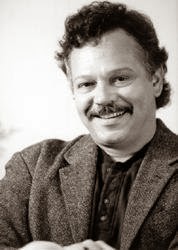
Book Report #85 - Command and Control by Eric Schlosser

Book 9 of 52
Page count - 17 CDs, 20 hours 40 minutes

I struggled with whether I should include this in my challenge since I did not "read" it.  However, it was far too important a book not to include.  Plus, this audiobook was unabridged and took over 20 hours of my time to consume.

I grew up during the Cold War and there were times that I was very scared my life would end in a thermonuclear flash.  According to Eric Schlosser there was more to be scared of than Geo-political tension between the super powers.  There were countless accidents, mishaps, losses, crashes, fires and human errors with atomic and thermonuclear weapons that it is a wonder we are all still alive today.

The book was chilling.  It scared me to my core.  I found the level of paranoia of the first two decades of the Cold War to be nearly incomprehensible.  How could men of power be so foolish?

The book itself followed a terrible accident that happened at one missile silo in the United States.  The author explained just how dangerous the Titan II missile system was on it's own, never mind that one of the most powerful warheads sat on top of it.  From the moment a technician accidentally drops a socket down the silo and damages the missile Schlosser takes us on a journey of just how that weapon was developed and the history behind the cold war as well.

It was an enormous subject that could have branched off into the Space Race, espionage, satellite development and submarine warfare.  I would have gladly listened to more.  But limits must be put on to the scope of a book and there was a lot of material to ponder here.

There were a couple of times in the history of the arms race that fiction played a powerful role in it's direction.  The first was the 1958 book called Red Alert by Peter George (published under the pen name Peter Bryant) which told the story of a rouge USAF general launching a first strike against the USSR.  The novel was so profoundly plausible that it was distributed among the decision makers in the US military and influenced readiness and safety policy for decades.  It was also the book that was the basis of Stanley Kubrick's movie Dr. Strangelove.

Red Alert is in the public domain and I've downloaded a copy which I will review here in the future.

The other bit of fiction was the Jason Robards TV movie The Day After, which showed how a nuclear war affected the residence of Lawrence, Kansas and Kansas City, Missouri.  This show had such a profound effect on President Ronald Ragan that after watching it, he began to negotiate with the USSR to stop nuclear testing and reduce the arsenal.

I once reviewed the book Seawitch by Alistair MacLean -( http://eric-the-mailman.blogspot.ca/2012/09/book-report-48-seawitch-by-alistair.html ) and blasted it for the unbelievable lack of security surrounding a military weapon storage facility.  Well, I was wrong about the security; there were many instances in Command and Control that illustrated incredibly lax measures taken to prevent the theft of atomic weapons.  Fiction may be fiction but it can be spot on.

READ THIS BOOK.

NOTE - Be ready to have the shit scared out of you at the end.  Just saying.

Eric Schlosser


Monday, 31 March 2014

Book Report #84 - Farside by Ben Bova

8 of 52
page count - 367

This had a higher page count than I'm trying to concentrate on but I've always enjoyed Bova's work and have found him an easy read.

As much as I like Bova I found this book to be longer than it had to be.  A lot of points were repeated to the point of annoyance.

That said, I enjoyed it.  This is the kind of science fiction that I'm always interested in; there are no aliens, for a start, it's about people, people trying to make a living, trying to accomplish something.  With that comes conflict and opposing interests.

The book confines itself to the moon but travel throughout the solar system is part of the reality of the setting.  This kind of near-earth SF is fun to read because it's the next logical step in human exploration.  Our technology today does not include interstellar travel. We don't have a warp drive, but if we wanted, we could travel about the solar system today.

I think Bova is doing humanity a favour by telling stories that still embraces the "What If..." spark of SF but keeps it close to home.  Perhaps he's trying to inspire people to make the "giant leap."

Ben Bova

Monday, 24 March 2014

Book Report #83 - Cinnamon Skin by John D. MacDonald

7 of 52
page count - 304

This is a much-beloved series, however, it is the penultimate book and I felt like I jumped in at the wrong place.

Travis McGee is a very likable guy but he came off a bit flat for me.  I think it was because McGee was a well established character and the book was written with a fan in mind.  It felt like a comfortable place to get reacquainted with an old friend not to be introduced to him.

We were going through a very cold period in Edmonton and I wanted to read a story set in a warm climate.  Florida fit the bill perfectly.

The novel was about tracking down a serial killer one who goes as far as being in a close relationship with his victims.  I liked the uniqueness of this kind of murderer but I was never taken by the story.

I'd give the book two stars - knowing full-well that I was coming at the series from the back end which was a disadvantage.

I have some other MacDonald novels on my shelf and I'll certainly give them a go.  Just not right away.

John D. MacDonald

Monday, 17 March 2014

Book Report #82 - Homeworld by Harry Harrison

6 of 52
Page count - 155

Published in 1980 it is chilling just how accurately Harrison predicted surveillance methods.

The main character, Jan Kulozik is an electronics engineer, one of the privileged elite who went about his life oblivious about the structure of his society.  An unfortunate sailing accident and risky rescue propel Kulozik into a plot to overthrow the ruling elite and restore democracy to humanity.

Set in a distant future London where interstellar travel has been a reality for generations, the story takes place mostly on Earth.  It felt like a Cold War thriller and was just as scary and dangerous as one.

The book was hopeful and bleak all at once.  It was wonderful.  I read it in two sittings.  Luckily this first novel was collected in paperback in 1994 with the title, "To The Stars." I'll be ripping into the next two installments very soon.

If you like underground spy thrillers and movies like Blade Runner this book will satisfy you.

Highly recommended.

Original book cover
Harry Harrison

Monday, 10 March 2014

Book Report #81 - Fifty-Two Pickup by Elmore Leonard

Book 5 of 52
Page count - 239

After the adventures of Max Fisher from Ken Bruen and Jason Starr, I just had to pick up a classic Elmore Leonard.

Published in 1974 it still stood fresh and believable 40 years later.  What I love best about Leonard's writing is how delves into the world of the criminals, something I find fascinating. 

Harry Mitchell, owner of a Detroit auto parts manufacturing business, is targeted for some classic blackmail.  His affair with a younger woman was filmed and shown to him along with their demands for money.  But the bad guys have targeted a man who decides to fight back.  Harry knows that if he pays, the bad guys will not just go away.

The book was a fun read.  One of the things I like about reading older books is how they can be a snapshot of the past.  Technology is a fun one; it's easy to forget how important payphones were or how different life was without the Internet.  In the opening scene Harry is shown the movie from a portable screen and home projector.

I was a few chapters in when my wife mentioned the line at the bottom of the cover: "Soon to be a Major Movie!"  An INDb search brought up the 1986 production starring Roy Scheider and Ann-Margret.  I'll have to track it down and watch it.

If anyone is interested in the vintage paperback book itself, leave a comment and I'll contact you for a mailing address.


Elmore Leonard


Monday, 3 March 2014

Book Report #80 - The Max by Ken Bruen and Jason Starr

Book 4 of 52
Page count - 220

I can't help it; I just loved this series.  Max Fisher, aka The M.A.X. Finds himself in prison.  But, just like always, he makes the best of it from sheer blind luck and arrogance.

I've never come across a character that was as much fun to read.

Bruin and Starr are a great writing team.

Ken Bruen
Jason Starr


Monday, 24 February 2014

Book Report #79 - Star Trek: Chain of Attack by Gene DeWeese

3 of 52
Page count - 251

Published in 1987 this book was a bit stiff; I found the narration went on a bit too much, for my tastes.  But, it was #32 in the Star Trek Original Series novels so, perhaps, Pocket Books and Paramount were still trying to build an audience and didn't want to alienate new readers.  Who knows.

The Enterprise was investigating some gravitational anomalies, as such things tend to happen in the Star Trek universe, and is flung right out of the Milky Way galaxy to some unknown and very distant galaxy.  The gateway they traveled through immediately closes and leave the crew stranded far, far from home.

While investigating nearby stars and planets Kirk and the boys discover that each and every habitable planet has been destroyed.  Some cataclysmic war wiped out all life from each planet they visit.  While trying to understand what may have happened they are attacked quite suddenly by the first space traveling species they encounter.

The Enterprise and its crew have dropped into a war that has been going on for centuries and it's up to them to try and survive long enough to get back home.

I found I had to press through this book.  There were times where I had to go back and re-read passages because I found myself glossing over what I was reading.  To be honest I had the plot pretty much figured out from the opening chapters.

If you miss this book - don't lose any sleep over it.

Next.

Monday, 17 February 2014

Book Report #78 - Monitor by Janice MacDonald


2 of 52
Page count - 322

I chose this book after reading an Edmonton Journal review of MacDonald's latest book: Condemnd to Repeat.  That book is part of a series; I'm the kind of person who likes to read a series in order.  Years ago, before this blog, I had read the first book; Sticks and Stones, so I decided this second instalment was the right place to jump in.

If memory serves Sticks and Stones only appealed to me because I was set right here in Edmonton.

In the first third of Monitor nothing, and I mean n.o.t.h.i.n.g, happens.  Set in 2003, Randy Craig, the narrator and protagonist of the story, takes on a job to monitor the happenings of a chat room.  Her job is to lurk about making sure participants don't break the rules of conduct.

I would classify this story as a cozy, it really was more about Randy making coffee, cleaning her apartment and gossiping with her friends than telling a mystery.  I got bored a lot.  The ending was pretty good if a bit far fetched.

All in all, for a second book, it was okay but it does not fill me with the desire to rush out to read the next instalment.

Next.

Web page for Monitor: http://janicemacdonald.net/monitor.html


Monday, 10 February 2014

Book Report #77 - Angle of Investigation by Michael Connelly

1 of 52
Page count - 92

A little while ago I stumbled on to a short essay, on Medium, that spoke of the writer's experience having just read 54 books in a year.  In 2011 I challenged myself to something similar; 26 books in a year, it's from that challenge that these book reviews are numbered.  Reading is my most enjoyed activity and I've got hundreds of books just waiting for me to read.

I've accepted the challenge to read a book a week.  The plan is to start a new book every Saturday.  Today I'm giving myself an easy challenge by reading a 92 page, Harry Bosch collection of three short stories.

Here we go.

Christmas Even - finds Harry investigating the death of a pawn shop burglar.  While working the case Harry finds a saxophone that once belonged to Quentin McKinzie which brings back powerful memories for him.

I really liked this story especially the ending it was sweet, sad and hart-warming.

Father's Day - Yikes.  This was a tough story to read; the death of a child is not an easy subject to tackle in a 31 page story.  This one was a bit of a gut punch, not graphic in any way but I was left wondering how anybody could bring himself to the actions taken here.

Angle of Investigation - This one read like a novel complete with a gripping back story of Bosh's second day on the job.  That day he and his partner discover the body of a woman who had been drowned, along with her dog, in the bathtub of her home.

The killer was never found until Harry picks up the case in his role in Open-Unsolved.  There is a satisfying twist and a shocking end.

Note: I once reviewed the first story in the book in a previous post.  This review is for the book as a whole.  Connelly is usually a safe bet for quality story telling.  You might find this book a perfect fit for commuting or waiting at the airport.  The three stories are satisfying and well told.

Recommended.


Saturday, 8 February 2014

Challenge Accepted!

A few days ago I ran across this wonderful little essay about the joys of reading.

Julien Smith wrote How to Read a Book a Week on Medium.

The writer wrote about how he challenged himself to do it and has accomplished it for FIVE YEARS!  I found it inspiring enough to challenge myself to the same thing.

I'm not a fast reader so I'm going to cheat just a little bit, in the hopes that I can build in some slack time to read longer books, I will be reading books that are short, preferable between 200 and 300 pages.  I've got a boat load of books on the shelf that qualify so there will be no shortage of material.

Look for my first cheater book review on Monday.  This will be the entry for the first week of February.  I hope to start a new book every Saturday.

This should be fun.

Links:
How to Read a Book a Week
Julien Smith
Medium

Monday, 3 February 2014

Book Report #76 - The Black Box by Michael Connelly

Out of respect for Michael Connelly I'm writing this post while listening to Sonny Clark's Dial "S" For Sonny originally recorded in 1957 on Blue Note records.

The latest installment of the Harry Bosch series finds Harry pursuing a 20 year old murder that occurred during the 1992 LA riots.  A Danish journalist was found dead in an alley a victim of an apparent execution.

While Harry reviews the information in the file he notices a small anomaly; a phone call logged 10 years after the murder inquiring about it.  By pulling on this thin thread Harry starts to uncover a much larger conspiracy that dates back to Operation Desert Storm of 1990.

At first I was caught off guard from the Desert Storm twist but leave it to Connelly to develop a gripping and believable plot.  I found this book to be quite the page-turner.  There were a couple little leaps in faith that I had to take; actions that I was surprised Harry took.

Unfortunately I found the climax to be a bit too "cinematic" for my tastes.  Like a bad TV episode, a surprising character comes to help Harry and the final chase to capture the Bad Guy made me groan in disappointment.

The novel was very good but the ending was botched, in my opinion.  The best part of the book was the musical suggestions I lifted from it. I always like tracing down the music that Connelly mentions.

Check out:
Art Pepper - http://straightlife.info/
Michael Formanek - http://www.amibotheringyou.com/index.html
Danny Grissett - http://www.dannygrissett.com/


Monday, 20 January 2014

Book Report #75.5 - The Cover Art of Blue Note Records by Graham Marshand Glyn Callingham

As a companion to the Blue Note biography I was also leafing through a gorgeous coffee table book that collected the cover art of so many iconic Blue Note LPs.

The book was not about the music but about the striking imagery of Reid Miles who did much to create the look and feel of a Blue Note album.  Through his work and the photography of Francis Wolff Blue Note records had a unique look that just spoke of cool.

I found this book endlessly fascinating. Given that the work of Alfred Lion and Rudy Van Gelder was of such a high standard you can actually judge a CD by its cover.  Blue Note was the standard bearer of Hard Bop and you can pick up just about any disc and enjoy it.

I've discovered artists I have never heard of just from the images from this book.

It's a fun way to look a little deeper into the jazz of the 50's and 60's.


Monday, 13 January 2014

Book Report #75 - Blue Note Records, the biography by Richard Cook

For the past few months I've been thick in discovering the Hard Bop era of jazz from the 1950's and 1960's.

I've been buying dozens of CDs mostly from Blue Note.  I've also been listening to loads of jazz radio programs, through the DAR.FM cloud-based recoding service and listening to them on my iPhone while delivering the mail. 

It didn't take long before I started to search out books on the subject of jazz.  I picked up this copy at a used record store in Nanaimo while visiting my parents last spring.

I finally dusted it off and tore through it at a pretty steady pace.

I found the book very informative, I made a few CD purchases just from reading it.

Ironically I found the book bogged down at times when long passages were devoted to describing specific recording sessions.  Of course the book would delve into this; that's what Blue Note did - produced records.  But I was more interested in how Blue Note fit into the history of jazz records and how it coped with the advent of R&B, free jazz and rock.

Every time my eyes started to glaze over Cook would switch gears from describing sessions to deals Blue Note made, industry milestones and stories of the lives of various artists.  Cook's ability to keep the story moving on all these fronts kept me turning pages.

This was an important book to me and I will keep it on the shelf along with my tiny vinyl collection and growing CD collection.

Recommended.

Wednesday, 1 January 2014

Book Report #74 - Waist Deep by Frank Zafiro


You know what I love best about reading? 

Sure the characters and stories can take up a special place in your life but what I love best are the authors.

I read quite a bit and sometimes I'm compelled to contact the author.  I even have a letter, in a drawer, from the man himself; Elmore Leonard.  Yup, I wrote him and he wrote back.

Mostly contact is via email or this blog. 

Frank Zafiro and I have corresponded a few times over the years.  Not long ago he emailed me asking if I'd read Waist Deep yet.  When was the last time you've had an author contact YOU?

Well, I dug the book up, I have a kindle copy, and started to get into it. However I had to put the book aside twice in order to cope with work.

But that's the test of a good book; can you put it down and get back into it days or weeks later?  If you can you know you have a connection.  This book was like that.

Every time I read something by Zafiro I wonder why I don't read more of his stuff.  The answer is that there is so much stuff out there that I want to discover that I can't stay in one place for any large block of time.  You know it's true because I blog about books as I read them; I'm all over the map.

But what about Waist Deep?

It was excellent.  Zafiro has such a wonderful, deeply damaged character in Stefan Kopriva that I'm always wondering if his character will just curl up in the fetal position and give up on life. I really enjoy seeing how he keeps himself motivated and moving forward.

Clocking in at 263 pages this book is right in the sweet spot for mystery fiction.  I love the old stuff from the paperback area of the 50's and 60's where authors were "writers"; guys who bashed away at a typewriter all day long to make a living.

Zafiro is that kind of writer, think Mickey Spillane if you want a comparison to the kind of writer I think Zafiro is.  Hell, his output alone should tell you that this guy is writing as a career.  He's also one of the lucky ones who's just loving it too.

Perhaps his years on the Spokane PD has taught him him to write with the notion of getting to the point.  I love this.  I don't need 200 pages of exposition to make me feel good about buying a book.  I need a good story that kicks me in the ribs.

Waist Deep kicked me hard.  I have two daughters who are about the same age as Kris Sinderling, the subject of this story, so perhaps I could relate to her dad who hires Kopriva to find the missing teen.

In any case this is a solid story that I very happy to have read.


Monday, 18 November 2013

Arena by Fredric Brown - The Science Fiction Hall of Fame Voume I

Humanity is on the cusp of inter-stellar war - mutual destruction in very likely.

Two representatives, one human one alien, are transported out of space and time to an arena by a god-like entity who is never seen and heard only once. 

They are instructed to fight to the death because the universe can only accommodate one of these races, there can be no middle ground.  Who ever wins the fight will ensure that his race will survive while the other will be wiped from existence.

I kept thinking, "I've read this before." and I may have; this story is a classic.  Then it struck me that it sounded very similar to an episode of the original Star Trek, where Kirk has to fight a giant lizard guy.

Not only did it sound familiar but Fredric Brown was credited for the episode.  You can read a quick story on how this came about at Memory Alpha: http://en.memory-alpha.org/wiki/Fredric_Brown

After a bit of Wikipedia research I found that Brown had a very interesting writing career and I may have to dig out some more of his fiction, both SF and mystery.

The story was first published in 1944 and is quite a bit different in the details than the Star Trek episode.  In the story the alien is a red ball with tentacles and the two combatants are separated by a force field.  For those who complain that TV shows and movies are often nothing like the source material; think about the photo above.  In the 60's how would they have been able create the alien from the story?  The visual arts has its own limitations so sometimes they have to make adjustments but the basic story remains.  If I remember correctly the ending of the Star Trek episode is quite different from the short story.

In any case I am a fan of Fredric Brown.

Fredric Brown

Astounding Science Fiction - June 1944

Monday, 11 November 2013

Book Report #73 - Star Trek: A Time to Die by John Vornholt

Captain Picard is relieved of command of the Enterprise and is kept sequestered at Star Fleet medical undergoing a psychological assessment.  His removal from command was covered in the first book, now he is under medical supervision and cannot go anywhere without being accompanied by his doctor.

Conditions in the Rashanar battle site remain unsolved and the remaining crew desperately want to clear Picard and get him back aboard.  Through a technicality Picard is allowed back on the Enterprise but not in command, he is always with his doctor who now believes in his innocence and is determined to help.

This book kept the same pace as the first and I was very happy with the story the A Time To ... series is nine books long but is split in to four two-book cycles with a single stand-alone novel completing the whole epic.

I also enjoyed the return of Westley Crusher in these two books.  The plot hole of the last book was explained but it was the most contrived and clunky part of the story.  Even with that one flaw it was still a very rich environment to set a Star Trek story.

Read it.  It's fun.


Monday, 4 November 2013

Book Report #72 - Star Trek: A Time to Be Born by John Vornholt

Back in the pulpy goodness of Space Opera.

Start Trek has always been my go to SF universe.

The "A Time to ..." Series spans 9 books and occupies the times between the films Insurrection and Nemesis.

The Enterprise is sent to help retrieve bodies and control scavengers in the Rashanar sector which was the site of a cataclysmic battle of the Dominion War.  Once they arrive they discover that the assignment is not as simple as it sounds; this region of space has many hazards including; the multitudes of wrecks and debris, gravitational anomalies, an antimatter asteroid, pirates, reluctant members of the Federation and a mysterious shape-shifting ship hiding among the wreckage.

The book was well paced, not bothering with much exposition.  Let's face it, if you're reading a Star Trek novel you understand the universe in general; exposition can be minimized.  When you dive into the novels, however, you must be prepared to accept that lots has gone on that is never covered in the TV shows or the movies.  This simply causes me to want to read other ST books.

I'd say this opening book sticks pretty close to the conventions of Hard SF.  Of course the science is flawed, unproven or incomplete but if that is what takes you out of the books you need to be reading something else.  Star Trek has always been about the characters and this book kept me interested throughout.

It's difficult to believe in any sense of danger when you know that, from the outset, authors are not permitted to do anything dramatic with the characters, like killing them.  If you take the mind set of reading a cliff-hanger series, then you wonder more about how a character is going to get out of a situation rather than if they will survive it.

There was one plot hole that I hope is resolved in the second book.  It involves the rescue of Data that was helped by an unknown party lurking in the Rahanar Battle Site.

I enjoyed this first book and dove right in to the second without pause.  So far, I'm hooked.
John Vornholt